
Is it possible?
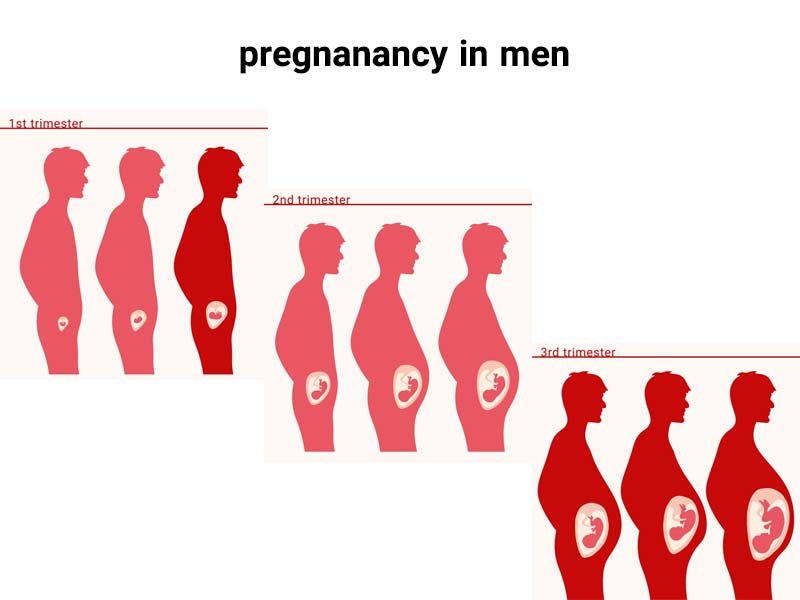
Yes, it’s possible for men to become pregnant and give birth to children of their own. In fact, it’s probably a lot more common than you might think. In order to explain, we’ll need to break down some common misconceptions about how we understand the term “man.” Not all people who were assigned male at birth (AMAB) identify as men. Those who do are “cisgender” men. Conversely, some people who were assigned female at birth (AFAB) identify as men. These folks may be “transgender” men or transmasculine people.
Transmasculine is used to describe an AFAB individual who identifies or presents toward the masculine side of the spectrum. This person may identify as a man or any number of other gender identities including nonbinary, genderqueer, or agender.
Many AFAB folks who identify as men or who don’t identify as women have the reproductive organs necessary to carry a child. There are also emerging technologies that may make it possible for AMAB individuals to carry a child.
Your reproductive organs and hormones may change what pregnancy looks like, but your gender isn’t — and shouldn’t be — considered a limiting factor.
If you have a uterus and ovaries
Some people who have a uterus and ovaries, are not on testosterone, and identify as men or as not as women may wish to become pregnant. Unless you’ve taken testosterone, the process of pregnancy is similar to that of a cisgender woman. Here, we’ll focus on the process of carrying a child and giving birth for AFAB folks who have a uterus and ovaries, and are,or have been, on testosterone.
Conception
For those who opt to take testosterone, menses typically stop within six months of starting hormone replacement therapy (HRT). In order to conceive, a person will need to stop the use of testosterone. Still, it isn’t entirely unheard of for people who are on testosterone to become pregnant from having unprotected vaginal sex. Due to a lack of research and variations in individual physiology, it’s still not entirely clear how effective testosterone use is as a method of pregnancy prevention. Kaci, a 30 year-old trans man who has undergone two pregnancies, says that many doctors falsely tell people starting testosterone that it will make them infertile. “While there’s very little research that’s been conducted on gender non-conforming pregnancies or the effects of HRT on fertility, [the] data [that] is available happens to be overwhelmingly positive.” Take the results of one 2013 report, for example. The researchers surveyed 41 transgender men and transmasculine folks who had stopped taking testosterone and became pregnant. They found that most respondents were able to conceive a child within six months of stopping testosterone. Five of these people conceived without having first resumed menstruation.
Conception can happen in many ways, including sexual intercourse and through the use of assisted reproductive technologies (AST). AST may involve using sperm or eggs from a partner or donor.
Pregnancy
Researchers in the aforementioned 2013 survey didn’t find any significant differences in pregnancy between those who did and didn’t use testosterone. Some folks did report hypertension, preterm labor, placental interruption, and anemia, but these numbers were consistent with those of cisgender women. Interestingly, none of those respondents who reported anemia had ever taken testosterone. Anemia is common among cisgender women during pregnancy. However, pregnancy can be a challenging time emotionally.
Transgender men and transmasculine folks who become pregnant often experience scrutiny from their communities.
As Kaci points out, “There’s nothing inherently feminine or womanly about conception, pregnancy, or delivery. No body part, nor bodily function, is inherently gendered. If your body can gestate a fetus, and that’s something you happen to want — then it’s for you, too.” People who experience gender dysphoria may find that these feelings intensify as their body changes to accommodate the pregnancy. The social association of pregnancy with womanhood and femininity can also lead to discomfort. Ceasing the use of testosterone may also exacerbate feelings of gender dysphoria. It’s important to note that discomfort and dysphoria aren’t a given for all trans folks who become pregnant. In fact, some people find that the experience of being pregnant and giving birth enhances their connection to their body.
The emotional impact of pregnancy is entirely dictated by each individual’s personal experience.
Delivery
The survey administrators found that a higher percentage of folks who reported testosterone use prior to conception had a cesarean delivery (C-section), though the difference wasn’t statistically significant. It’s also worth noting that 25 percent of people who had a C-section elected to do so, possibly due to discomfort or other feelings around vaginal delivery.
The researchers concluded that pregnancy, delivery, and birth outcomes didn’t differ according to prior testosterone use.
Although more research is necessary, this suggests that the outcomes for transgender, transmasculine, and gender non-conforming folks are similar to that of cisgender women.
Postpartum
It’s important that special attention be given to the unique needs of transgender people following childbirth. Postpartum depression is of particular concern. Studies show that 1 in 7 cisgender women experience postpartum depression. Given that the trans community experiences much higher rates of mental health conditions, they may also experience postpartum depression in higher numbers. The method of feeding a newborn is another important consideration. If you’ve elected to have a bilateral mastectomy, you may not be able to chestfeed. Those who haven’t had top surgery, or have had procedures such as periareolar top surgery, may still be able to chestfeed.
Still, it’s up to each individual to decide whether chestfeeding feels right for them.
Although there has yet to be a study on transgender men and lactation, exogenous testosterone has long been used as a method for suppressing lactation. This suggests that those who do take testosterone while chestfeeding may experience a decreased production in milk. With this in mind, it’s important to consider whether delaying your return to testosterone use is the right choice for you.
